£897.00
Lose Weight For Less With A Mealtime Tablet.
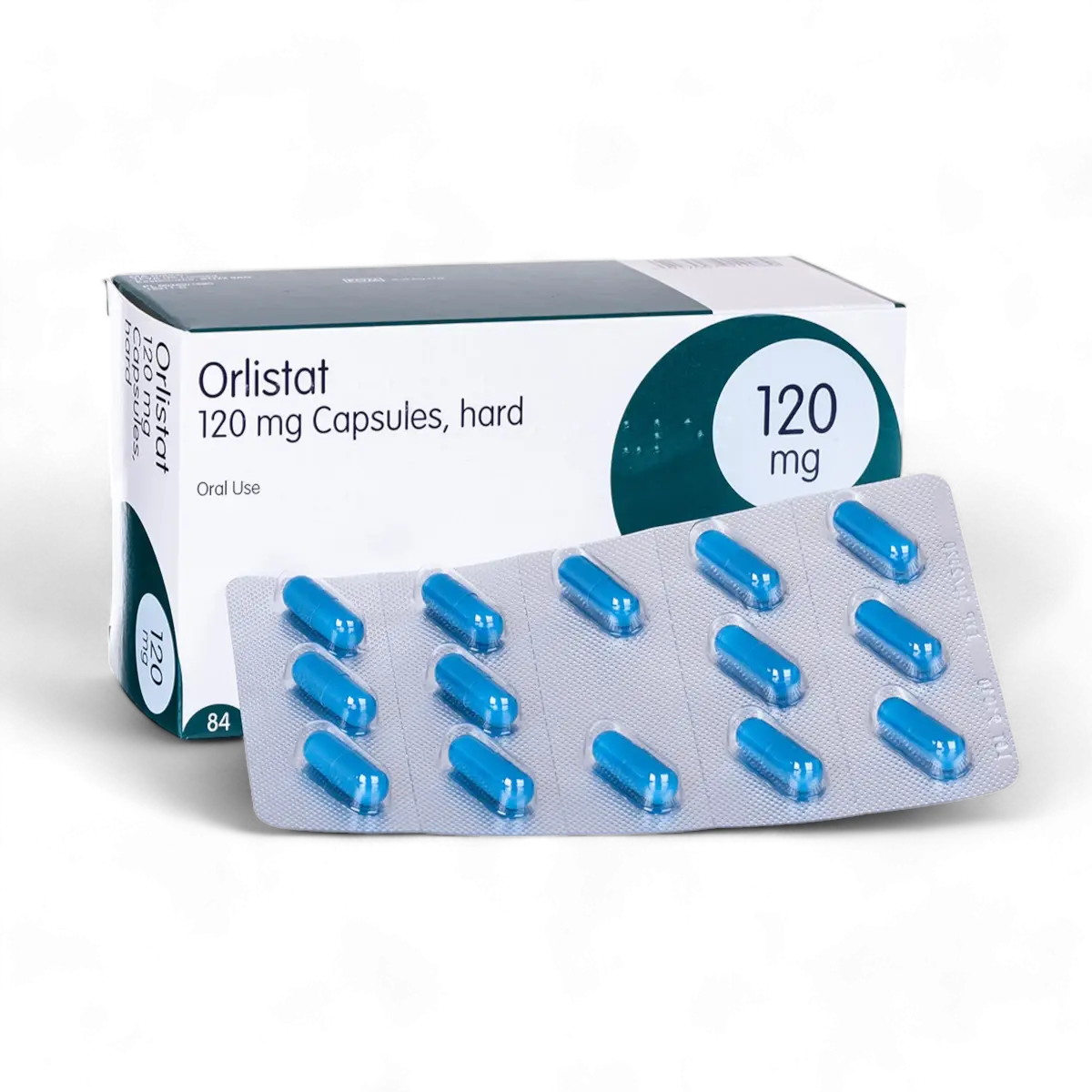
Orlistat is a generic tablet that interferes with your bodies’ process of breaking down and storing fat. This excess fat that your body doesn’t store gets passed in your stool.
Orlistat is a tablet you take with meals to reduce the amount of fat your body absorbs, helping you lose weight. To get the most out of Orlistat, you’ll take it alongside a reduced-fat, low-calorie diet (where you get around 30% of your daily calories from fat).
Orlistat is approved to help people with a BMI equal to or greater than 30 (or 28 if you have a health risk or condition related to your weight) lose weight. But it’s not suitable for everyone to use. If any of the following apply to you, speak to your physician about your weight loss options before taking Orlistat:
Unlike other popular weight loss drugs like Wegovy or Zepbound, Orlistat comes as a pill rather than an injection; so if you don’t like the idea of injecting yourself, Orlistat could be a good alternative.
Orlistat could also be a good option if you’re looking to build muscle alongside weight loss. Weight loss injections reduce your appetite to help you lose weight, which can make it difficult to eat enough to build muscle. While you’ll still have to eat a reduced-fat diet with Orlistat, it won’t affect your appetite.
Generic Orlistat tablets are only available in one dose: a 120 mg tablet. You’ll take a tablet up to three times a day, with each meal you eat that contains fat. There’s also a branded tablet called Alli, which contains a lower 60 mg dose of orlistat, that’s available as an over-the-counter medicine.
Orlistat is a generic medication that’s named after its active ingredient: orlistat. It’s sometimes referred to as a ‘fat binder’, because it stops your body from breaking down and absorbing as much fat from your food. But this is a bit of a misnomer, because orlistat targets enzymes responsible for breaking down fat in your digestive system, instead of the fat itself.
There’s an enzyme in your digestive system called lipase that breaks down and stores the fat from the food you eat as energy. Orlistat targets lipase and interferes with this process, stopping your body from storing as much fat. This excess fat is then excreted when you use the bathroom.[1]
This is why eating a reduced-fat diet is really important when you’re taking Orlistat. If you eat too much fat while on Orlistat, there’s a good chance you’ll get unpleasant side effects, like:
You’ll take Orlistat any time you eat a meal with fat in, up to three times a day. You can take your Orlistat capsule before, during, or up to an hour after your meal. For Orlistat to work properly, you should take it alongside a balanced, calorie-controlled diet, where you get no more than 30% of your daily calories from fat. You should try to spread out your fat intake across three meals, and avoid eating fatty foods or snacks in between meals
Orlistat isn’t suitable for everyone, and there are some things that you need to be aware of when taking it.
Here’s all the official info on it. If anything is unclear, let our clinician know, and they can talk with you about it.
There’s also a lower dose of orlistat available, called Alli. Alli contains only half the dose that Xenical and Orlistat do – so if you’re struggling with side effects, it could be a good option for you. Alli is also available as an over-the-counter medication, so you don’t need a prescription.
But if Orlistat isn’t the right weight loss treatment for you, weight loss injections could be another option. These work a little differently from Orlistat: they affect signals in your brain and the speed your stomach empties to reduce your appetite and cravings. This should help you reduce the amount you eat, and help you to lose weight.
A study in which 80 patients with obesity were randomised into receiving either 120 mg of Orlistat or placebo for three times a day measured weight, waist circumference, BMI, and cholesterol. It found that Orlistat was significantly more effective than placebo, with the Orlistat group losing an average of 4.65 kg (compared to 2.5 kg in the placebo group), and reducing their BMI by an average of 1.91 kg/m2 (compared to 0.64 kg/m2). Waist circumference was also reduced by an average of 4.84 cm in the Orlistat group (vs 2 cm in the placebo group), and cholesterol was reduced by 10.68 mg (vs 6.18 mg).[1]
If you haven’t lost weight after 12 weeks of Orlistat, it might not be the right treatment for you – speak to your physician about other weight loss treatment options.
If you (or someone else) takes too much Orlistat, get medical advice right away – you might need medical attention.
As is the case with Orlistat, you will need a prescription to buy it, whether you’re buying it online or not.
Orlistat is a little different to Alli as it contains 120mg of the active ingredient, meaning that it’s twice as strong. You need a prescription for it on this basis.
Illegal diet pills, weight loss supplements or ‘fat burning tablets’ are widespread online, so you should always check you’re buying licensed medications from registered pharmacies.
If you notice any issues with the treatment, or if you have any concerns, send us a message.